

Close Menu
    Facebook X (Twitter) Instagram
    Friday, April 24
    • Demos
    • Prevention, Immunity & Public Health
    • Nutrition & Healthy Eating
    • Buy Now
    Facebook X (Twitter) LinkedIn VKontakte
    Health Secrets
    Banner
    • Home
    • Features
      • Example Post
      • Typography
      • Contact
      • View All On Demos
    • Prevention, Immunity & Public Health

      Screening for Severe Combined Immunodeficiency

      April 23, 2026

      5 Methods to Rejuvenate your Heart

      April 23, 2026

      Sunburn Can Lead to Sunstroke

      April 23, 2026

      Prevention of Winter Flu and Bacteria

      April 23, 2026

      Prevent West Nile Virus

      April 23, 2026
    • Typography
    • Medical Conditions & Diseases
      1. Prevention, Immunity & Public Health
      2. Weight Loss & Metabolism
      3. Lifestyle, Habits & Wellness
      4. View All

      Screening for Severe Combined Immunodeficiency

      April 23, 2026

      5 Methods to Rejuvenate your Heart

      April 23, 2026

      Sunburn Can Lead to Sunstroke

      April 23, 2026

      Prevention of Winter Flu and Bacteria

      April 23, 2026

      Caffeine and Fat Loss

      April 23, 2026

      Watery Vegs and Calories Dropping

      April 23, 2026

      Green Tea for Weigth Loss

      April 23, 2026

      Fat as a Factor for Satiety

      April 23, 2026

      The Benefits of Live Shows

      April 23, 2026

      Let the Sun Shine!

      April 23, 2026

      Brush Your Teeth to Beat Heart Disease

      April 23, 2026

      Laugh to Prevent Heart Diseases

      April 23, 2026

      Weight Training Increases Arterial Stiffness

      April 23, 2026

      How To Stop the Heartburn

      April 23, 2026

      Beating Asthma

      April 23, 2026

      Dry Scalp Diseases and Treatments

      April 23, 2026
    • Buy Now
    Health Secrets
    Home » RNA Interference
    Peptides & Performance Research

    RNA Interference

    Daniel MercerBy Daniel MercerApril 23, 2026No Comments3 Mins Read
    Facebook Twitter Pinterest LinkedIn Tumblr Email
    Share
    Facebook Twitter LinkedIn Pinterest Email
    rna interference

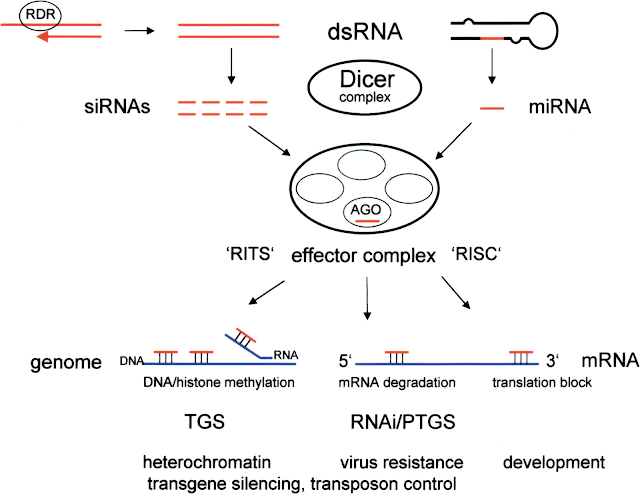
    RNA interference (RNAi), discovered by Andrew Fire and Craig Mello in 1998, is essentially the use of small fragments of RNA, known as small interfering RNAs (siRNAs) to block, or interfere with, the production of specific genes. These occur naturally in mammalian cells, but can also be generated artificially and delivered into cells. Each RNA fragment has a sequence that is complementary to a part of the target gene, in that it is exactly complementary to the sequence of the gene. When it binds, it effectively blocks that part of the gene, by preventing interaction with the machinery of the cell whose job it is to translate that DNA sequence into protein. As a result, the protein is not made.

    Since its discovery, RNAi has been used extensively in the laboratory to research which genes are responsible for what functions. By blocking a gene, and observing the effect it has on a cell or organism, the function on that gene can be deduced. Prior to RNAi, this kind of research was only possible using laborious and expensive gene knockout techniques.

    The Potential of RNAi in Medicine

    The ability to switch on or off specific genes on demand has important implications for the treatment of genetic disorders. For example, some genetic disorders are caused by the over-production of certain proteins, while others, such as cancer, are caused by genetic mutations that are not inherited. By using RNAi sequences that are specific to the gene that codes for the wrongly-expressed protein, its production can be significantly reduced, potentially even to normal levels (1).

    Naturally produced RNAi, especially in lower organisms, is very important in the defense against viruses, and acts by blocking the RNA that is the viral genetic code as soon as it enters the cell. Similarly, siRNAs can be generated against human viruses such as HIV, and therapies are currently being developed for this infection as well as hepatitis B and C amongst others.

    However, there are a number of hurdles that must be overcome before RNAi can be used routinely as a therapeutic agent for disease in humans.

    Delivery of siRNAs to Tissues

    One of the main problems with RNAi is the problem of delivery to the correct cells, especially to those tissues deep in the body. Delivery to deeper tissues is hampered by the body’s defense system, including nucleases that degrade nucleic acids (DNA and RNA) (2,3).

    There are few organs that are easily accessible to RNAi, including the eye and the respiratory tract. In both these cases, RNAi can be delivered via saline solution to result in effective knockdown of the target genes. Indeed, one of the first conditions to be investigated for RNAi therapy was age-related macular degeneration.

    siRNAs can also be delivered systemically via intravenous injection using liposomal particles to aid uptake into the cells. This may be effective for delivery to the liver and jejunum, but is not appropriate for other organs (2). Viruses are perfectly designed to rapidly and efficiently invade cells, and infect them with their own genetic material, RNA. By replacing viral RNA with the RNAi sequence, the virus is able to deliver the ‘drug’ directly to the cell in which it is needed.

    Additional barriers to the use of RNAi therapy in humans include safety and tolerability issues, tissue-specific targeting and duration of effect, and research is ongoing into identifying ways in which these barriers may be overcome. Resolution of these issues could ensure that RNAi becomes the mainstay of treatment of genetic diseases.

    Share. Facebook Twitter Pinterest LinkedIn Tumblr Email
    Previous ArticleIGF-1 Activates Androgen Receptor Activity
    Next Article Stem Cell Tourism – A Scam or Frontier Science?
    Daniel Mercer

    Daniel Mercer is a fitness and nutrition writer with a strong interest in exercise science, metabolism, and performance research. He covers training principles, nutrition fundamentals, and emerging research with a practical, educational approach.

    Related Posts

    IGF-1 Activates Androgen Receptor Activity

    April 23, 2026

    Stem Cell Tourism – A Scam or Frontier Science?

    April 23, 2026

    Skin Patches Could be a New Era in Vaccine Against Pandemics

    April 23, 2026
    Leave A Reply Cancel Reply

    • Facebook
    • Twitter
    • Instagram
    • Pinterest
    About
    About

    Your source for the lifestyle news. This demo is crafted specifically to exhibit the use of the theme as a lifestyle site. Visit our main page for more demos.

    We're social, connect with us:

    Facebook X (Twitter) Pinterest LinkedIn VKontakte
    From Flickr
    Ascend
    terns
    casual
    riders on the storm
    chairman
    mood
    monument
    liquid cancer
    blue
    basement
    ditch
    stars
    Copyright © 2017. Designed by ThemeSphere.
    • Home
    • Prevention, Immunity & Public Health
    • Sleep, Recovery & Hormones
    • Mental Health & Emotional Well-Being
    • Buy Now

    Type above and press Enter to search. Press Esc to cancel.