


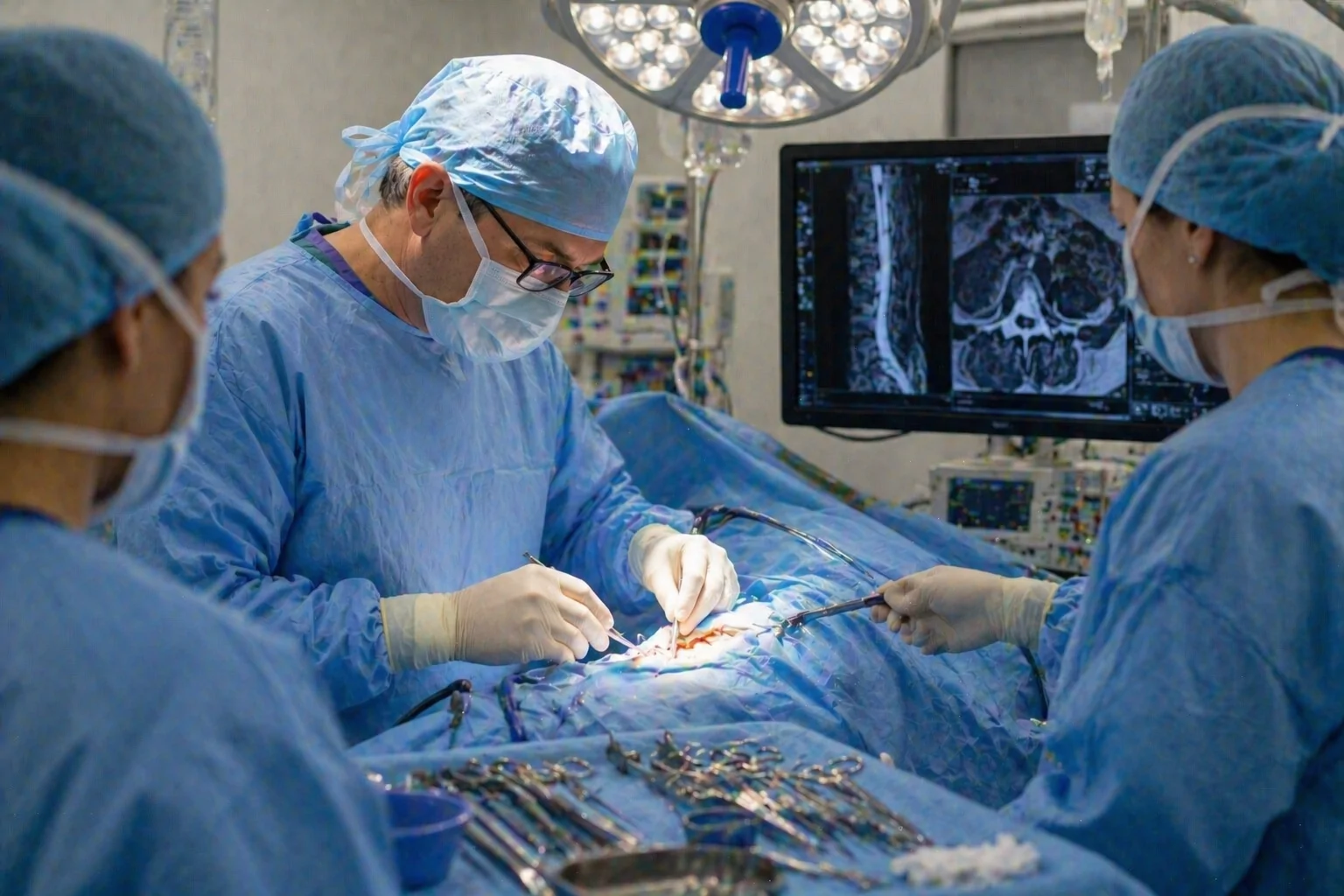
If your doctor has recommended open back surgery to treat degenerative disc disease (DDD), it’s normal to have questions. Understanding the procedure, risks, and alternatives can help you make a more informed decision about your treatment.
Before proceeding, it’s also helpful to understand how the condition is diagnosed by reviewing degenerative disc disease diagnosis.
How Is Open Back Surgery Performed?
Open back surgery is a traditional surgical approach used to treat severe spinal conditions. The procedure typically involves:
- A large incision in the back or abdomen to access the spine
- Removal of the damaged intervertebral disc
- Placement of an implant or spacer in the disc space
- Use of surgical hardware to stabilize the spine
- Insertion of bone graft material to promote fusion
This process, often referred to as spinal fusion, requires careful recovery and rehabilitation.
What Are the Risks of Open Back Surgery?
As with any major surgery, open back procedures carry potential risks. These may include:
- Infection
- Blood loss or clotting
- Adverse reactions to anesthesia
- Failed back surgery syndrome (persistent pain after surgery)
According to the National Institutes of Health research on back pain treatments, outcomes can vary depending on the condition and treatment approach.
How Do I Know If I Need Open Back Surgery?
Open back surgery is usually considered when conservative treatments fail to relieve symptoms. Before proceeding, it is often recommended to:
- Seek a second medical opinion
- Explore non-surgical treatment options
- Evaluate the severity of symptoms and impact on daily life
Some patients find relief through alternatives like non-surgical lumbar treatments, which should be considered before surgery.
Are There Alternatives to Open Back Surgery?
Yes, many patients may qualify for less invasive procedures. Minimally invasive techniques can achieve similar outcomes with smaller incisions and faster recovery times.
You can learn more about these options in this guide to non-invasive back surgery and modern techniques.
These procedures often involve:
- Small incisions
- Use of specialized surgical tools
- Reduced tissue damage
- Shorter recovery periods
In some cases, procedures like slipped disc surgery may also be performed using minimally invasive methods.
What Is Recovery Like?
Recovery from open back surgery can be lengthy. Patients typically require:
- Hospital stay after surgery
- Weeks to months of rehabilitation
- Gradual return to normal activities
Following proper back surgery recovery guidelines is essential for optimal healing.
Conclusion
Open back surgery for degenerative disc disease is a significant procedure that may provide relief when other treatments fail. However, it comes with risks and a longer recovery period.
Exploring all available options, including minimally invasive alternatives, and consulting with a qualified specialist can help you choose the most appropriate treatment plan.
Frequently Asked Questions
Open back surgery is a traditional procedure involving a larger incision to access and treat spinal conditions such as degenerative disc disease.
Recovery can take several weeks to months, depending on the procedure and the patient’s overall health.
Like any major surgery, it carries risks such as infection, blood loss, and complications, but many patients experience relief when properly treated.
Yes, minimally invasive spine procedures may be an option for some patients and often involve shorter recovery times.
Surgery is usually recommended when non-surgical treatments fail and symptoms significantly impact quality of life.
