


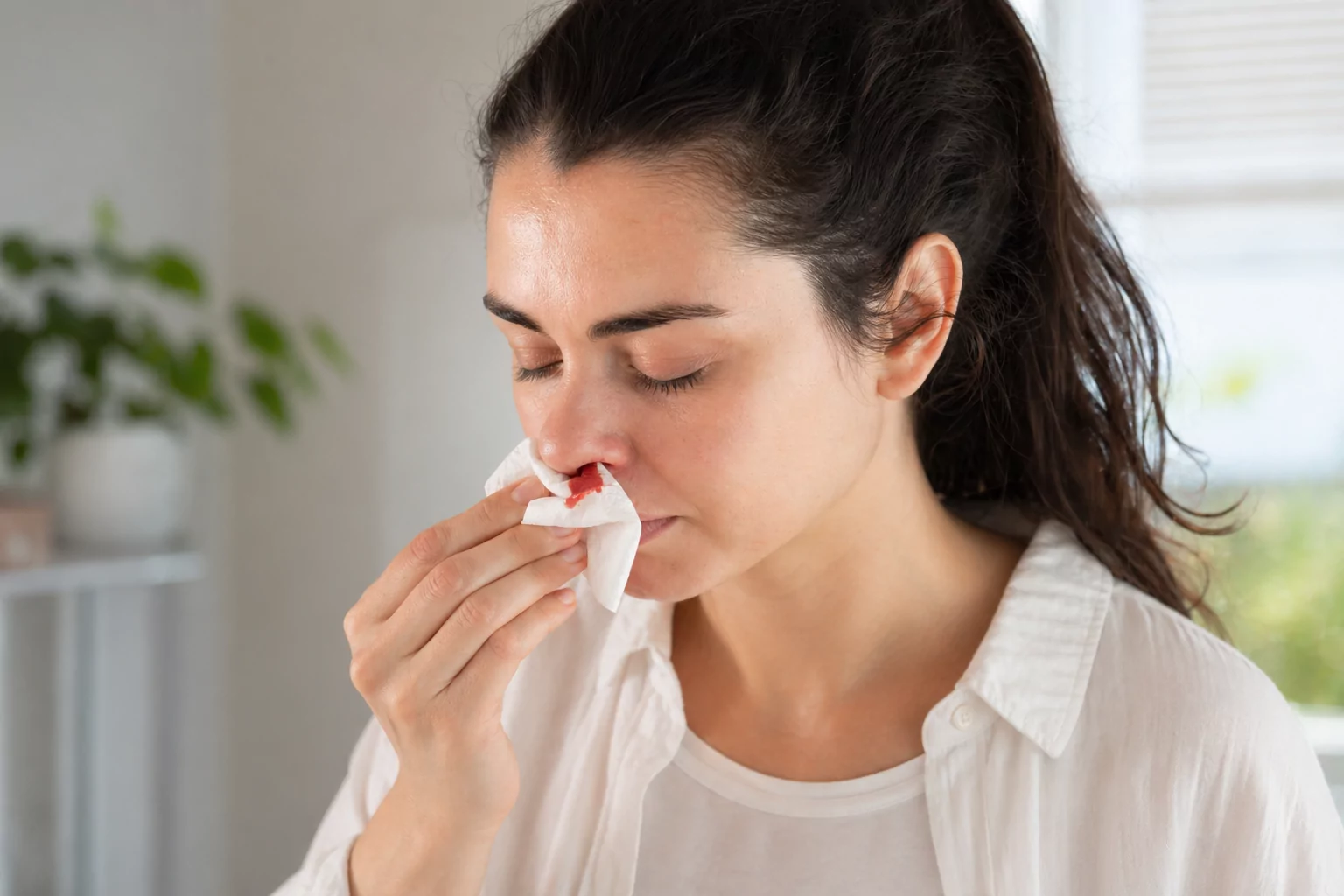
Nosebleeds, also known as epistaxis, are common—especially in children—and are usually harmless. However, frequent or severe nosebleeds may indicate an underlying health issue that requires attention.
If you need immediate guidance, you can follow these steps on how to stop a nosebleed quickly.
Common Causes of Nosebleeds
Nosebleeds often occur when the delicate lining inside the nose becomes irritated or damaged. Some of the most common causes include:
- Dry air: Low humidity, especially in winter or heated indoor environments, can dry out nasal membranes
- Trauma: Nose picking, injury, or forceful blowing can damage small blood vessels
- Medications: Certain drugs, including blood thinners and even some medications, may increase bleeding risk
- Allergies and infections: Conditions like sinus infections can inflame nasal passages
- High blood pressure: Can contribute to more severe or frequent bleeding episodes
According to the CDC overview on bleeding disorders and nosebleeds, frequent nosebleeds may sometimes be linked to underlying clotting issues.
When Nosebleeds May Signal a Serious Problem
While occasional nosebleeds are normal, recurring episodes may point to more serious conditions such as:
- Bleeding disorders like hemophilia
- Nasal tumors or polyps
- Chronic hypertension
- Rare genetic conditions such as Osler-Weber-Rendu syndrome
If nosebleeds occur frequently or last longer than expected, it’s important to consult a healthcare provider.
Types of Nosebleeds
Nosebleeds are generally classified into two types:
- Anterior nosebleeds: The most common type, originating from the front of the nose
- Posterior nosebleeds: Less common but more serious, typically occurring in older adults
Posterior nosebleeds often require medical intervention due to their severity.
How to Treat a Nosebleed at Home
Most anterior nosebleeds can be treated effectively at home using simple first aid techniques:
- Sit upright and lean slightly forward
- Pinch the soft part of your nose for 10–15 minutes
- Spit out any blood to avoid swallowing
- Avoid blowing your nose immediately after bleeding stops
Applying a cold compress can also help reduce swelling and constrict blood vessels.
How to Prevent Nosebleeds
Preventive measures can reduce the frequency of nosebleeds:
- Use a humidifier to maintain moisture in the air
- Apply a small amount of moisturizer inside the nose
- Use saline sprays to keep nasal passages hydrated
- Avoid smoking and irritants
Maintaining overall health through a balanced diet can also support tissue repair and resilience.
When to See a Doctor
Medical attention is necessary if:
- Nosebleeds occur more than once a week
- Bleeding lasts longer than 20 minutes
- You feel dizzy or weak
- Bleeding follows an injury or trauma
A healthcare provider can identify underlying causes and recommend appropriate treatment.
Conclusion
Nosebleeds are usually harmless and manageable with simple home care. However, understanding the causes, applying proper treatment, and taking preventive steps can help reduce their occurrence.
If nosebleeds become frequent or severe, seeking medical advice ensures early detection of any underlying conditions.
Frequently Asked Questions
Dry air and irritation of the nasal lining are the most common causes of nosebleeds.
They can be harmless, but frequent episodes may indicate an underlying condition that requires evaluation.
Using a humidifier, staying hydrated, and avoiding nasal irritation can help prevent nosebleeds.
If bleeding is heavy, lasts more than 20 minutes, or occurs frequently, medical advice is recommended.
Yes, certain medications, especially blood thinners, can increase the risk of nosebleeds.
